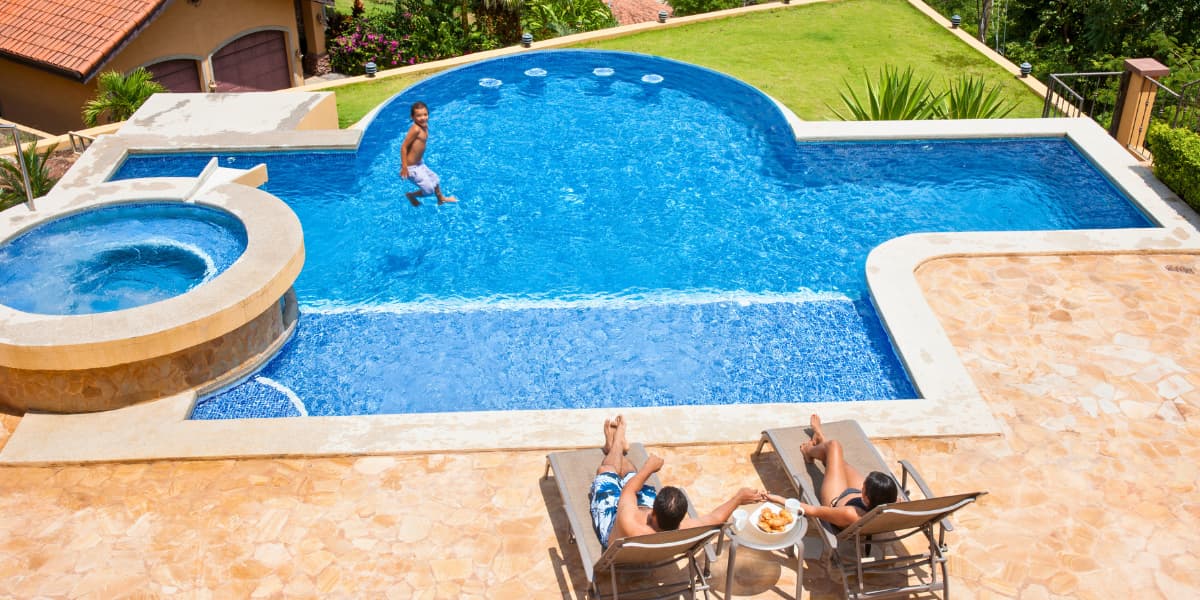
Personal Loan vs. HELOC: What’s the Best Way to Finance Your New Swimming Pool?
If you’re planning to build a swimming pool, one of the most important decisions you’ll make is how to finance …

 By Britt Godfrey
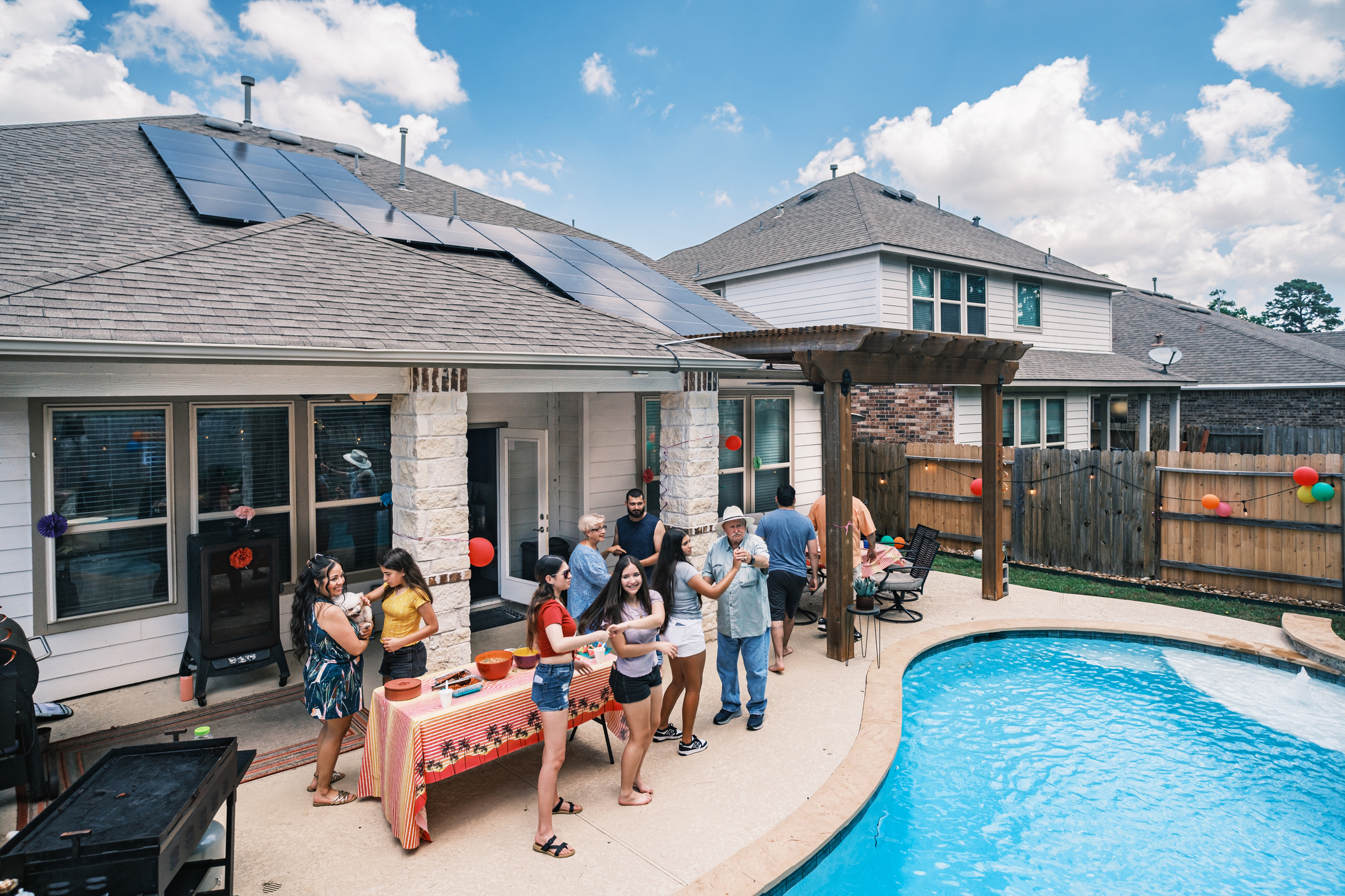
Swimming pool season. It never seems long enough, does it? Depending on where you live, its length may vary. Regardless of your local climate and the length of your pool season, though, it can be longer if you transform your pool from an unheated pool to a heated pool. Not all heating methods are equivalent, when it comes to effectiveness, cost efficiency, and energy efficiency. If you love the idea of extending your pool season, you need to learn about three pool heating options.
Solar Heaters
The least expensive and most environmentally friendly option, solar heaters live up to their name: they rely on the sun’s heat and visibility to heat your pool’s water. The bad news? If it’s not a hot, sunny day, solar heaters don’t do much. Of course, those are the days when you may want a heated pool the most, so there’s a definite down side. With no CO2 emissions and a very low price point, solar heaters are good beginner options. They can also be used in conjunction with other heating systems.
One form of solar heater is a solar pool cover. These covers allow for simple installation and offer an insulated air layer that traps heat, allowing it to increase water temperature by up to 5 degrees. While that might not sound like much, it can actually extend your swimming pool season by 2 whole months!
Gas Heaters
Gas heaters really pack the biggest punch when it comes to extending your swimming pool season. Gas heaters work by use of combustion, allowing them to provide the most time-efficient heating solution. On the down side, though, gas heaters are also the most costly. While some gas heaters use natural gas, others use propane. Essentially, the way they work is by circulating the swimming pool water, drawing it through a filter and heater. The gas burns in the combustion chamber of the heater, heating the water as it travels through.
Not all gas heaters are created equal. High-performance gas heaters are eco-friendly and quiet. Some have electronic ignitions and streamlined, low-profile designs that blend well with any landscaping.
Heat Pumps
Working almost as quickly as gas heaters, heat pumps are both less expensive and more environmentally friendly. Without producing harmful CO2 emissions, heat pumps offer on-demand heat at a fraction of the cost of gas heaters. Unlike gas heaters, heat pumps don’t actually generate heat. Instead, they capture heat by means of electricity. As the water is circulated, it travels through the heat pump’s filter and heater. From there, the heater’s fan pulls in the outside air, allowing it to pass over the evaporator coil. The coil’s liquid refrigerant then absorbs heat from the air, creating a gas. The now-warm gas passes through the compressor, which in turn increases the heat before a condenser transfers that heat from the gas to the water, which is then returned to the pool.
View available swimming pool financing programs for North Carolina Call Lyon Financial today at 877.693.8812 for the financing you need to make the memories you deserve!
If you’re planning to build a swimming pool, one of the most important decisions you’ll make is how to finance …

A backyard pool is more than a luxury; it’s an investment in your home, your lifestyle, and your family’s memories. …
Discover the financing options that fit your needs and budget. You are important to us. Need help choosing a loan or have questions? Call us — we’re here to help: 877-754-5966.