
 By Britt Godfrey
When it comes to installing a small pool in your yard, finding the right shape and size to fit your property is one of your most important considerations. Pools come in a wide selection of different shapes. In general, however, they normally fit into a couple of broad categories: freeform and linear. Understanding the advantages and disadvantages of these shapes will help you to determine which one would best fit your space and budget.
Freeform vs. Linear Tiny Pools
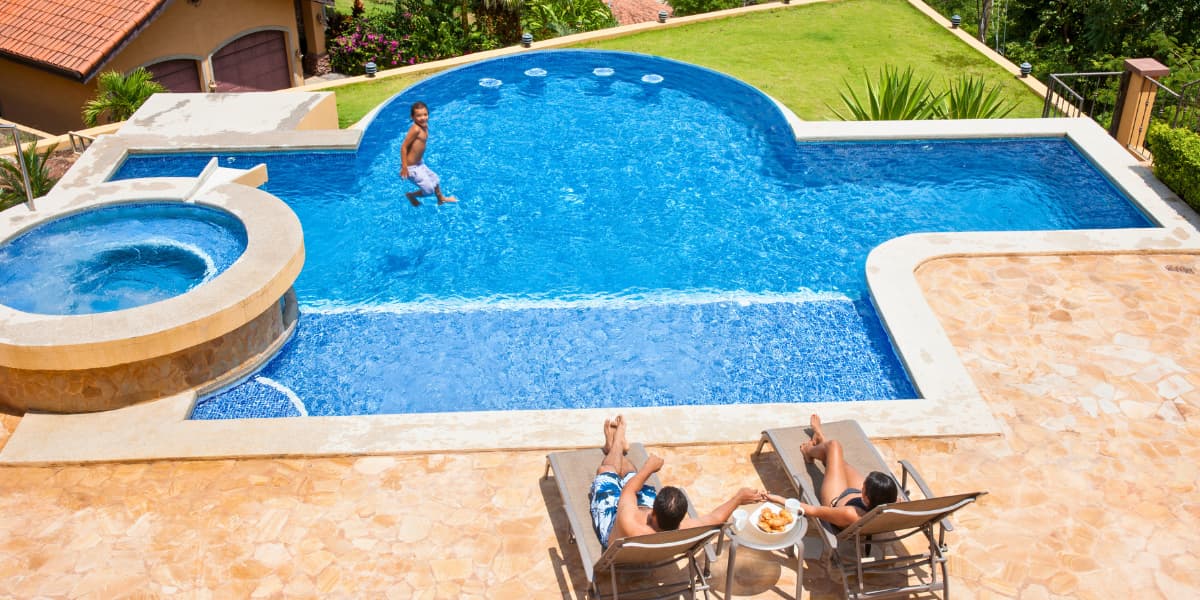
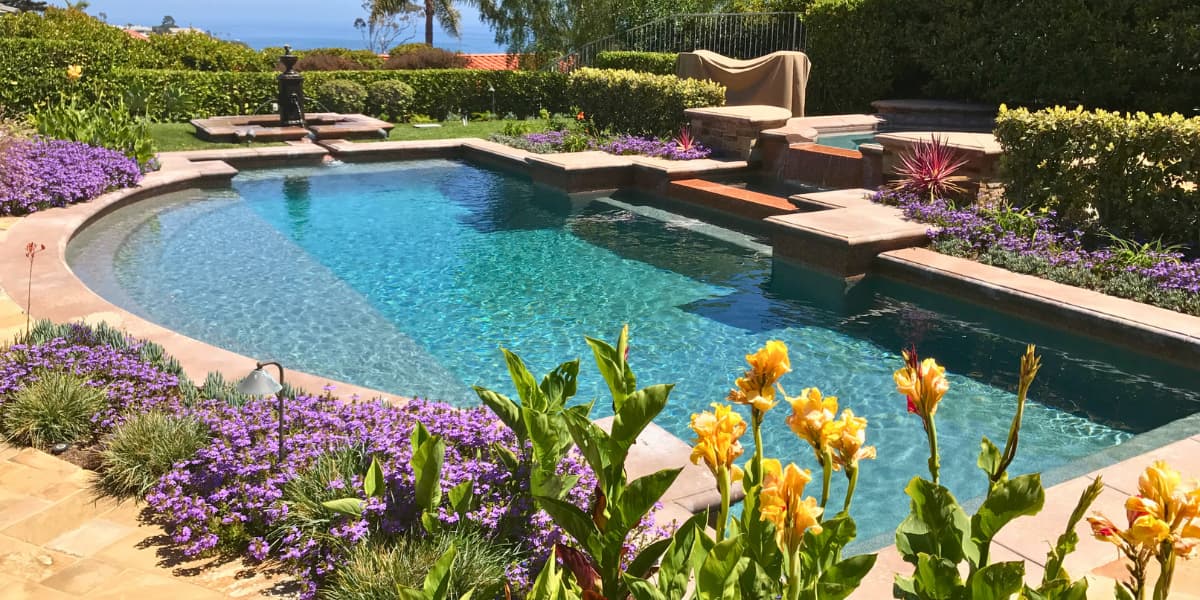
Freeform pools don’t have corners and angles. Instead, they have curves and contours. Amoeba, kidney, round, and oval shaped pools would all fall into the freeform category. If you’re hoping to save on space, a freeform pool will give you a bit more room to work with. Their curves are ideal for allowing a bit more room for deck space surrounding the pool.
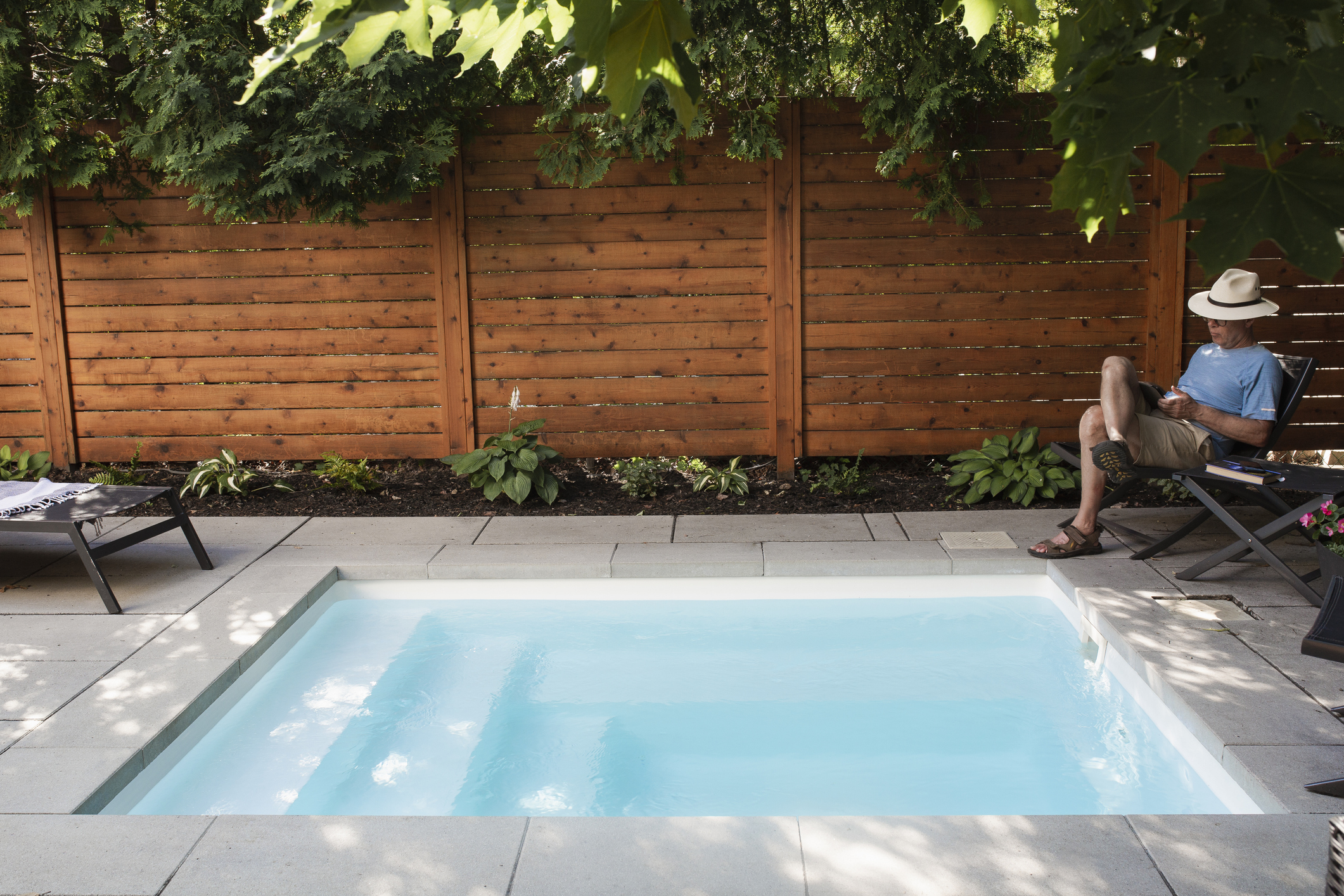
Linear pools have straight edges and corners. These would include traditional rectangular and square shaped pools. Linear pools generally take up a bit more space than freeform pools. If getting more swimming space for your dollar is a big priority for you, linear could be your ideal tiny pool choice.
Which of these two designs you choose will largely depend on the shape of your yard and your personal preferences. If your yard is an oblong, rectangular shape, you may just want to go with that same shape for your pool and choose a linear pool. If you want to break up the area and create the illusion of having a larger space, installing a strategically placed freeform tiny pool may help you to pull off your design goals.
Though the shape is important, the cost of installation has to be a factor as well. The price you can expect to pay for installing an in-ground swimming pool basically boils down to two main considerations: pool materials and pool size.
As we discussed in our first article in this series, concrete is the most expensive to install by far. Fiberglass and vinyl are comparable in cost if you factor in the lower installation cost of vinyl and the lower long-term maintenance cost of fiberglass. If you have a large budget, you could consider concrete. If you’re limited on funds, one of the other two options would be more feasible.
Tiny pools are far less expensive to install and maintain than large pools. How affordable your pool will be will depend on how small you’re willing to go. Many tiny pool owners choose to install pools that are anywhere from 18 to 26 feet. You can get an accurate estimate for the cost of installing either a fiberglass, vinyl, or concrete tiny pool in your yard from your South Carolina pool installation contractor.
There are a number of different advantages and disadvantages to owning a tiny pool. In our final two articles in this series, we’ll explore some of those pros and cons, so you’ll be able to make a more informed decision about whether or not you want to add a small pool to your outdoor living space.
View available swimming pool financing programs for South Carolina Call Lyon Financial today at 877.693.8812 for the financing you need to make the memories you deserve!

If you’re planning to build a swimming pool, one of the most important decisions you’ll make is how to finance …
If you've been searching for the perfect time to build a swimming pool, your answer is here: spring. As the …
Discover the financing options that fit your needs and budget. You are important to us. Need help choosing a loan or have questions? Call us — we’re here to help: 877-754-5966.